Ground improvement in Fullerton encompasses a suite of geotechnical techniques designed to enhance the engineering properties of soil and rock, transforming marginal or problematic ground into reliable foundation support. This category addresses challenges ranging from loose sands and soft clays to collapsible soils, all of which are prevalent in Southern California's complex geological setting. For developers and infrastructure agencies in Fullerton, investing in soil improvement is not merely a best practice—it is often a necessity dictated by seismic risk, differential settlement potential, and stringent building codes. By employing methods such as Deep Soil Mixing (DSM) design or dynamic compaction design, engineers can mitigate liquefaction hazards and increase bearing capacity, ensuring long-term structural integrity.
Fullerton sits at the northern edge of the Los Angeles Basin, where the geology transitions from alluvial fan deposits of the Santa Ana River to older marine and non-marine sedimentary formations. The city's subsurface is characterized by interbedded layers of Holocene-age silts, clays, and sands, often with shallow groundwater tables that complicate excavation and foundation work. These conditions demand a nuanced understanding of partial saturation and matric suction, making unsaturated soil analysis a critical component of any ground improvement strategy. The presence of compressible organic silts in some low-lying areas further underscores the need for tailored solutions that account for local stratigraphy and hydrogeology.
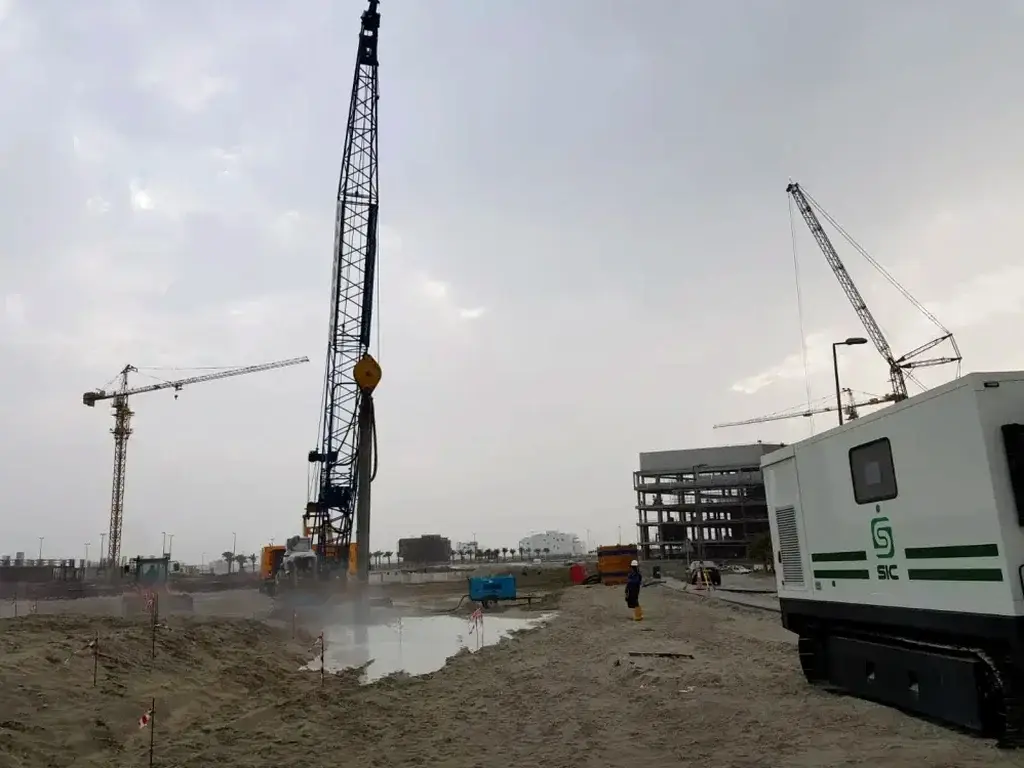
Regulatory compliance in California is governed primarily by the California Building Code (CBC), which adopts and amends the International Building Code (IBC) with state-specific seismic provisions. Chapter 18 of the CBC addresses soils and foundations, requiring geotechnical investigations that evaluate liquefaction, slope stability, and allowable bearing pressures. For ground improvement projects, adherence to ASCE 7 and the recommendations of the Southern California Earthquake Center (SCEC) is essential, particularly when designing for seismic events. Local municipalities, including Fullerton, may impose additional grading ordinances that mandate specific compaction standards and post-construction verification through geotechnical instrumentation (design and installation).
The types of projects that typically require ground improvement in Fullerton range from mid-rise commercial structures and residential subdivisions to public works like schools and transportation corridors. Any development over soft or liquefiable soils—common in the city's historic floodplains—will likely need pre-construction soil treatment. For sites with thick clay deposits, a preloading design (without surcharge) can accelerate consolidation and reduce post-construction settlement without the need for heavy surcharge loads. Transportation projects, including bridge approaches and retaining walls, frequently incorporate geogrid specification to reinforce fills and improve slope stability. In essence, ground improvement is the invisible backbone of safe, durable infrastructure in seismically active regions.
Quick answers
What is ground improvement and why is it necessary for construction projects in Fullerton?
Ground improvement refers to the modification of soil properties to enhance strength, reduce compressibility, and mitigate liquefaction potential. In Fullerton, it is necessary due to the prevalence of alluvial soils, seismic activity, and high groundwater levels that can compromise foundation performance. Without treatment, buildings may experience excessive settlement or structural distress during earthquakes.
How do local soil conditions in Fullerton influence the choice of ground improvement methods?
Fullerton's subsurface often contains interbedded sands, silts, and soft clays from ancient river deposits, with shallow groundwater that affects soil saturation. These conditions favor methods like deep soil mixing for stabilization in wet environments or dynamic compaction for loose granular soils. A site-specific unsaturated soil analysis helps determine the optimal technique based on in-situ moisture and density.
What are the key regulatory standards governing ground improvement in California?
The California Building Code (CBC) Chapter 18, along with ASCE 7 for seismic design, sets the primary standards. These require geotechnical reports addressing liquefaction, settlement, and bearing capacity. Local Fullerton grading ordinances may also mandate specific compaction levels and post-improvement testing, often verified through geotechnical instrumentation to ensure compliance.
What types of projects typically require ground improvement services?
Any project on soft, loose, or collapsible soils—common in Fullerton's floodplain areas—may require improvement. This includes residential subdivisions, commercial buildings, schools, and transportation infrastructure like bridges and roads. Preloading design and geogrid specification are frequently used to stabilize embankments and foundations prior to construction.