Slope engineering in Fullerton encompasses the comprehensive assessment, design, and stabilization of natural and man-made inclines to protect life, property, and infrastructure from failure. The city's varied topography, from the rolling hills of Coyote Hills to the steeper terrains near the West Coyote Hills and Brea Dam areas, demands rigorous geotechnical attention. This category covers everything from initial slope stability analysis to the implementation of robust retention systems, ensuring that residential developments, transportation corridors, and commercial projects remain safe against landslides, erosion, and seismic activity. In a region where urban expansion increasingly meets challenging terrain, understanding slope behavior is not just a technical necessity but a community safeguard.
Fullerton's geological setting is dominated by sedimentary formations typical of the Puente Hills and Los Angeles Basin, including interbedded sandstones, siltstones, and clay-rich soils that can be highly erodible and prone to saturation. The area experiences a Mediterranean climate with concentrated winter rainfall, which frequently triggers shallow failures and debris movements in weak strata. Additionally, the proximity to active fault systems like the Whittier Fault introduces seismic coefficients that must be integrated into any slope design. These conditions make debris flow analysis particularly critical for properties at the base of canyons or along historic alluvial fans, where rapid water-soil mixtures can cause catastrophic damage.
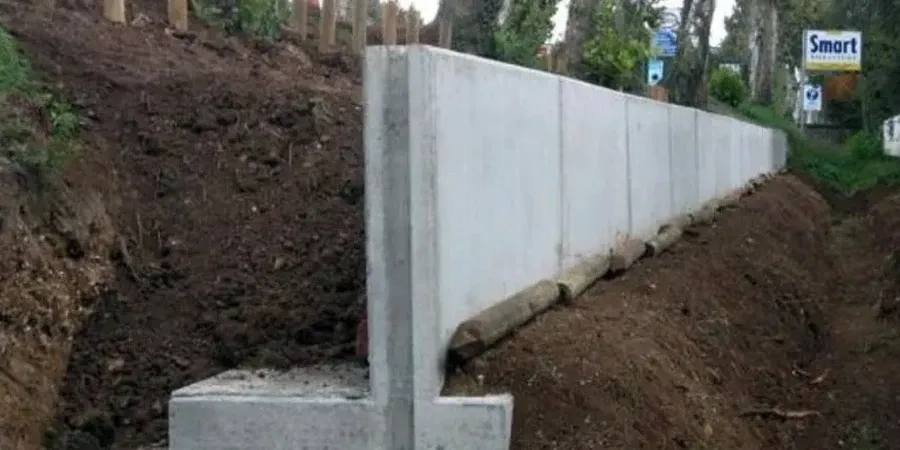
All slope-related work in Fullerton falls under the jurisdiction of the California Building Code (CBC), specifically Chapter 18 on Soils and Foundations, and local amendments enforced by the City of Fullerton Building Division. Geotechnical investigations must comply with CBC Section 1803 for slope stability reports, while retaining structures over four feet require engineered designs per Section 1807. The California Geological Survey's Seismic Hazard Zone maps also mandate site-specific studies for liquefaction and earthquake-induced landslides in designated zones. Professionals must adhere to ASCE 7 for minimum design loads and follow guidelines from the International Code Council's Evaluation Service for proprietary stabilization systems, ensuring every solution from active/passive anchor design to reinforced earthworks meets strict safety thresholds.
Typical projects requiring slope expertise in Fullerton include hillside residential construction in neighborhoods like Sunny Hills, where cut-and-fill operations demand retaining wall design to maximize usable land while preventing surcharge-induced failures. Infrastructure ventures, such as road widening along State Route 57 or trail development in the Juanita Cooke Greenbelt, frequently need diaphragm wall design or sheet pile wall design for deep excavations adjacent to existing slopes. Commercial developments on graded pads, stormwater detention basins, and remediation of ancient landslide complexes also rely on these specialized services to mitigate long-term deformation risks and satisfy lender-required geotechnical assurances.
Quick answers
What are the most common causes of slope failures in Fullerton?
Slope failures in Fullerton typically result from a combination of intense winter rainfall saturating clay-rich sedimentary soils, seismic shaking from nearby faults like the Whittier Fault, and human activities such as improper grading or inadequate drainage. Undercutting of slopes for road construction and uncontrolled water infiltration from irrigation or broken utilities also frequently trigger shallow landslides and debris flows in the region.
When is a slope stability analysis required for a development project in Fullerton?
A slope stability analysis is mandated by the California Building Code when proposed construction lies on or adjacent to slopes steeper than 3:1 (horizontal:vertical), within mapped seismic hazard zones, or when grading exceeds five feet in height. The City of Fullerton also requires such analyses for any project that could impact adjacent properties or public right-of-way through potential slope movement.
What factors influence the choice between a retaining wall and a diaphragm wall for slope support?
The selection depends on site constraints, soil conditions, and project requirements. Retaining walls are suited for moderate heights with available excavation space, while diaphragm walls are preferred for deep excavations in urban areas with limited access and where groundwater control is critical. Fullerton's variable bedrock depth and the presence of expansive soils often dictate the most cost-effective and technically sound solution.
How long does a typical slope stabilization project take from investigation to completion?
A typical slope stabilization project in Fullerton spans three to six months, depending on complexity. This includes two to four weeks for field exploration and laboratory testing, three to five weeks for engineering analysis and design submittals, and another four to eight weeks for construction and city inspections. Complex sites requiring deep anchors or extensive drainage systems may extend beyond six months due to specialized equipment and curing times.