Road geotechnics forms the backbone of safe, durable, and cost-effective transportation infrastructure in Fullerton, California. This specialized discipline bridges civil engineering and earth sciences to address how soils, aggregates, and pavement materials interact under traffic loads and environmental stresses. In a city traversed by major arterials like Harbor Boulevard and Orangethorpe Avenue, and subject to both commuter traffic and seasonal weather patterns, understanding subsurface behavior is not optional—it is essential. From the initial flexible pavement design to long-term performance monitoring, road geotechnics ensures that every layer beneath the wheel path contributes to a roadway's lifespan and safety.
Fullerton sits within the Peninsular Ranges geomorphic province, characterized by complex alluvial deposits, weathered sedimentary formations, and pockets of expansive clay soils. These local conditions pose distinct challenges: clay-rich subgrades can swell when wet and shrink during dry spells, leading to differential movement and cracking, while loose alluvial sands may densify under repeated loading, causing rutting and settlement. Groundwater can be shallow in portions of the city, particularly near the Coyote Creek drainage, increasing the risk of moisture-related pavement distress. A thorough road subgrade design process must account for these factors, incorporating laboratory testing of soil plasticity, bearing capacity, and moisture susceptibility to create a stable platform for the pavement structure.
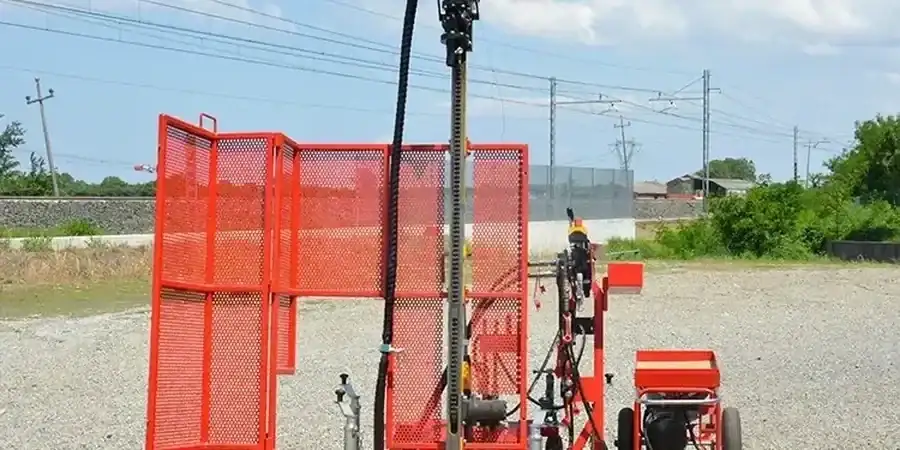
Regulatory compliance in Fullerton aligns with California Department of Transportation (Caltrans) standards, the AASHTO Guide for Design of Pavement Structures, and the Orange County Public Works specifications. Local amendments often require geotechnical investigations that follow Caltrans Site Investigation Guide protocols, with particular attention to R-value testing for subgrade stiffness and expansive soil mitigation measures. Environmental regulations under the California Environmental Quality Act (CEQA) may also mandate erosion control and stormwater infiltration analysis as part of roadway projects. These requirements ensure that every design—from residential streets to commercial parking lots—meets minimum thresholds for structural capacity and drainage.
Road geotechnics is called upon for a wide range of project types in Fullerton. New residential subdivisions require full geotechnical evaluation of access roads and collector streets. Commercial developments, such as retail centers along Malvern Avenue, demand pavement sections engineered for heavy delivery trucks and high traffic volumes. Rehabilitation projects in older neighborhoods often begin with an existing pavement evaluation to determine whether distress stems from subgrade failure, material fatigue, or drainage deficiencies. Even utility trench reinstatements and bike lane additions benefit from geotechnical oversight to prevent future settlement at the interface between new and old construction.
Quick answers
What is road geotechnics and why is it critical for pavement performance?
Road geotechnics is the engineering discipline that applies soil mechanics and geology to the design, construction, and maintenance of roadway foundations. It ensures that subgrade soils can support traffic loads without excessive deformation or moisture damage, directly influencing pavement lifespan, ride quality, and safety. Without proper geotechnical input, pavements are vulnerable to cracking, rutting, and costly premature failure.
How do Fullerton's soil conditions affect road construction and design?
Fullerton's geology includes expansive clay soils and alluvial deposits that can swell, shrink, or settle under changing moisture and load conditions. These behaviors cause pavement distress like cracking and uneven surfaces. Geotechnical investigations identify these risks through soil sampling and laboratory testing, allowing engineers to specify stabilization techniques, select appropriate materials, and design pavement sections that accommodate local ground behavior.
What standards and regulations govern road geotechnical work in Fullerton?
Projects in Fullerton must comply with Caltrans specifications, the AASHTO Guide for Design of Pavement Structures, and Orange County Public Works standards. Key requirements include R-value testing for subgrade strength, expansive soil mitigation protocols, and adherence to CEQA environmental guidelines. These regulations ensure structural adequacy, drainage performance, and environmental protection for all roadway projects.
When should an existing pavement evaluation be performed in Fullerton?
An existing pavement evaluation is recommended when roadways exhibit distress such as alligator cracking, rutting, or potholes, or before overlay and rehabilitation projects. It determines whether failure originates in the asphalt layers, base course, or subgrade. In Fullerton, evaluations are also prudent after utility cuts or when repurposing older pavements for heavier traffic loads than originally designed.